THE SCREENING ROOM

I recently purchased a pair of Vandersteen Model 2Ce Signature II speakers, and without a doubt, these are the finest sounding speakers I've heard in this price range (under $2000.00), or in almost any other. They're a steal at the price, and I wish more people who review audio, or rave about speakers that cost ten-to-twenty times more, would give Vandersteens a listen. The Vandersteens, in my opinion, will change the way I evaluate any CD, SA-CD, DVD or Blu-ray disc. I've fallen back in love with music, so long as the SA-CD or CD I have is well mastered. I am hearing audio in the compact discs that I've never heard before. I can just imagine what a Blu-ray disc, with uncompressed audio, would sound like on the Vandersteens.
Time Warp
Allow me to step back in time to show you how I came to Vandersteen speakers. This will give you some perspective of the mistakes I made along the way, and how I feel I've turned a corner on the way to audio bliss.
As much as I love good sound, whether it comes from music or from a DVD, I've often thought that I wasn't hearing the whole picture. Something was always missing, no matter how many components or speakers I bought to fix the sound. I was a dog chasing my tail. I had thought, against my inner "audiophile's" judgment, that speakers that came in small cubes, and music that came from compact discs, were the epitome of fine sound reproduction.
During the 1980s, when I invested heavily into CDs, I sneered at the "analog" camp that still championed LPs and shot down any notion that a digital recording sounded great. LPs and analog sound were antiquated, I naively thought. I was one of those goofs that purposely checked the CD label for "recorded digitally" or "DDD." I turned the other direction when I saw that label read "digitally mastered analog recording. I was wrong. Terribly wrong. I now look at my vast CD collection and wince. What was I thinking? Much of my CD collection sounds horrible.
Without the benefit of listening to good audio equipment, my judgment was clouded. I was content with hearing crap, and I knew better. I used to think that perhaps it was the original recording that sounded bad, not my CDs or sound system. Some CDs did sound good, but for the most part, they sounded bad. I kept investing in CDs. I upgraded my Sanyo rack system, bought from a department store, to those little sound cubes with a "subwoofer" module. In the store, they sounded great! The clarity coming from those small cubes was amazing. The bass was loud. I plucked down my money, even though they sounded poor in comparison to other speakers in the store. It was that name brand that rhymes with toes. There was an aura of being in an exclusive club of fellow owners that I was attracted to. If everyone said they sounded good, from the floor sales rep, to the guy in the polo shirt getting into his Mercedes, they must've been good. Once I got them home, they sounded different from the store demonstration. They sounded weak. Lots of treble, no midrange and no bass. Admittedly, I suffered for years and years with these speakers. Some CDs still sounded good, as did some LaserDiscs or DVDs, but overall, the sound was severely lacking.
Seeking Clarity
A few years ago when I freelanced for a home theater magazine, I came across a series of articles by Richard Hardesty. The magazine, like many today, emphasized big buck components and speakers with prices out of the range of mere poor mortals like me. Honestly, I didn't read much into these articles, because I thought the equipment was too complicated, too expensive and something I didn't think I could handle. Give me a good receiver and some of those cube speakers, I was okay. But I knew that I wasn't satisfied with the sound coming out of my system.
Hardesty wrote many articles and reviews for the magazine. Dissatisfied with my audio equipment, I revisited his writing and came away impressed. This guy knew what the hell he was talking about. One of the speakers he liked to focus on were from a company called Vandersteen. I had seen their ads in the magazine I wrote for, and they didn't seem like anything special. They weren't covered with piano black paint, so they didn't look rich. Looking plain, I honestly didn't give them much consideration. Plus their lower line of speakers, the Model 1, 2, and 3, didn't have atmospheric prices. They couldn't be that good, I thought. High sticker prices on speakers meant better performance. Right? That is until I took one of Hardesty's seminars on audio, and I was instantly hooked on what the Vandersteen speaker line meant in performance and price.
At the time of Hardesty's seminar, he had a pair of Model 3A Signatures, plus Vandersteen surrounds and subwoofers. He demonstrated a variety of material from CDs, SA-CDs, LPs, and DVDs in Dolby Digital or DTS sound. All of this was played through some very high-end, yet considerably priced equipment from Wadia, Sony (ES) and Theta, to name a few. The Vandersteens revealed the recordings with clear and realistic sound. One of the pleasures was listening to a Mel Torme live performance on LP ("Mel Torme and Friends Recorded at Marty's, New York City"). It sounded like Mel was right in the living room with us. I was reminded just how good LPs could sound and how a good pressing/recording could blow a CD out of the water.
Excited from what I heard at Hardesty's seminar, I bought an SA-CD player and I found a pair of used beige Vandersteen 3A speakers. I had the intention of upgrading them to the Signature version, but never got around to it. The speakers were hooked up to a Yamaha receiver and just didn't sound good. I knew it wasn't the speakers, but my system. Plus my wife was livid that I bought them in the first place. I sold them to a lucky guy on eBay for a very nice price. My loss and his gain.
In my despair, I bought a highly recommended pair of Paradigm Atoms. Wonderful speakers for the price. $200.00. Surprisingly rich in sound, these are quite respectable little speakers. Yet they still sounded just okay.
Berdan Saves The Day
Upon a visit to Brooks Berdan's shop in Monrovia, California, I was finally brought down to reality. Brooks is one of the most respected gentlemen in audio and is known as the king of analog. He runs the store with his son Brian, who is no less knowledgeable in audio. The first thing Brooks asked me was what was in my system. He pinpointed the culprit to my bad sound; the receiver.
Keep the speakers for now, replace the receiver with an integrated amplifier. Or run a couple of RCA lines from the receiver's pre amp hook-ups into an amplifier, and presto! Nice CD sound on its own audio line, and movie sound on its own audio line. I bought a nice little Rega Brio3 amplifier from him and couldn't be happier.
But I still wasn't totally satisfied.
Nearly a year later, I bought a pair of Vandersteen 2Ce Signature II speakers. I had gone between the Model 1C speakers and the higher priced speakers. My self imposed budget and my conscience said the Model 1C speakers were the speakers to buy. But my audio hungry side said opt for the Model 2. Brooks and Brian steered me to the 2Ce Signature IIs. Unlike many big box retailers which try to sell you on the most expensive equipment, rather than what's in your budget, the Berdan's take an honest assessment of your current needs. No snow job here. No used car salesman tactics. They don't pull an attitude of "audiophile" superiority on their customers. Even though some of the audio equipment they sell is very expensive, the Berdan's don't make you feel like you're a chump. They're great salesmen and honest, and totally patient.
I didn't want to spend a lot of money and be unhappy with the results once I got home. But the Berdans calmed my fears of audiophile mystique. They told me that I'd be much happier in the long run with the 2Ce Signature IIs. They offered a tweeter, midrange and woofer, whereas the budget Model 1C had a tweeter and woofer. A nice little speaker, but I'd get more of what I was looking for in the Model 2.
Sold!
Setting Up The Vandersteens
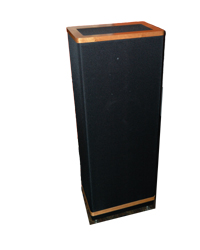
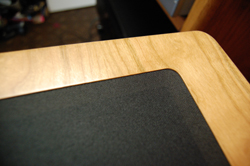
I bought a pair in cherry. As luck would have it, they nearly match my furniture finish. They're not quite as heavy as the Model 3A speakers, but heavy enough to require two people or a dolly to transport them into your home. I brought them in with a furniture dolly and used an old blanket to slide their boxes across the floor, by myself.
Vandersteen does a commendable job in boxing their speakers. The boxes aren't fancy or have slick logos or lingo on them. The speakers are surrounded by plenty of fitted cardboard for shipment or storage, as well as a thick plastic bag.
I carefully placed them on the floor, tipped them up and pulled the boxes off. Berdan installed the recommend speaker stands, so I didn't have install them. If you buy the speakers and stands, they're easy to install. I filled in the bottom of the stands with playground sand and replaced the end cap. Easy.
The Vandersteen 2Ce Signature II comes with an extensive manual. I'll admit I'm scared of anything to do with math and graphs. The Vandersteen manual has them. Fear not! I took my time and read the manual right away. Also, Brooks had already told me how to set them up. "Toe" them in about 1/4 to 1/2-inch, set them plenty of feet from the wall, and I was almost good to go. I used Brooks "Kenobi" Berdan and the manual as my guides. Doing a little bit of rough math and division, I figured that about three feet away from my wall was good. It had been a good distance for my previous Vandersteens and Paradigms. My listening room isn't huge, so I had to make some compromises, but they're very minor.
Using the manual's recommendation of speaker tilt, I calculated my listening height on my couch. I used the recommend "string" method as stated in the manual. After adjusting the spikes on all three sections of the stands, and using both my eyes and a level, it looks like I got the tilt and toe-in correct. I may still do some minor adjustments over time, but for now, everything sounds outstanding.
I hooked up some generic thick 10-gauge speaker wire, bi-wired, to the speakers and was ready to listen.
Looks Are Deceiving
The Vandersteen 2Ce Signature IIs aren't housed in fancy enclosures to make them seem rich. I've bought, and returned, speakers that looked great with "piano black" finish and fancy looking enclosures. Why? Because they didn't sound all that wonderful. My little cube speakers and the "bass" module looked very hip and sleek at the time, but good looks on a speaker don't mean squat if they don't put out great sound. The Vandersteens put out excellent sound, despite not looking like a Steinway.
After having them set in my listening room, I've gotten used to the minimalist design of the speakers. They are handsomely crafted in cherry wood and look substantial. They're not wimpy in appearance by any means. As I've looked at them, they are good looking speakers. They may not be the kind of speakers you'd immediately say look fabulous. But their design is in tune with sound, not being a runway model. And because of their newness, they smell pretty darned good like good furniture would. (These are not pieces of furniture, but that's the closest comparison I could think of).
I won't go into the technical details of the Vandersteen 2Ce Signature IIs too much. As much as I've learned over the years about sound, a lot of the technical jargon is over my head. What does make sense in Richard Vandersteen's approach to his speakers is that they're all time-and-phase aligned. As I understand it, all of the drivers are working in unison to get the sound to your ears at the same time. A lot of speakers, and I'm guilty of falling for this trick for many years, get the tweeter's sound to your ears first, for example. This creates a false sense of liveliness to a recording, or that "wow factor." Listen to that tweeter! In the Vandersteens, the sound you hear is correct and fires on all cylinders. You won't get bass, then midrange, then treble, or any other odd combination from them. Instead, you get music as it should be played back, and movie soundtracks with more clarity than what you're probably used to. Nothing is exaggerated by the Vandersteen speakers. Put in a bass-heavy performance, you get out a bass-heavy performance. Put in a bad recording, you get out a bad recording.
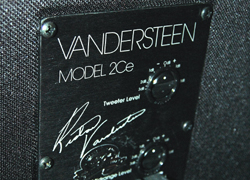
If you're looking for constant bass that isn't present in a recording, then buy speakers that over emphasize bass. I found out that some of my recordings that I thought had lots of bass in them really don't. The recordings that do have good bass, like Garbage's self-titled album (Alco Records, 1995), come out clean and free of bloated bass. The Vandersteens don't struggle with bass at all.
Remember that pair of speakers I told you about? You know, the ones I returned. Those speakers emphasized way too much bass almost all of the time. It was jarring and annoying after only a short amount of time. The Vandersteens won't annoy you. The bass is pleasant and got my toes tapping. One of these days, I will upgrade to Vandersteen's 2W subwoofers. For now, the bass is great.
One of the true tests of a time-and-phase aligned speaker is through the step response. This is something I credit both Richard Vandersteen (via his website) and Richard Hardesty for turning me on to. Out of all the graphs I've seen on various speakers, the step response graph makes the most sense to me. (Check out speaker reviews on Stereophile magazine's website. They list a lot of these tests on most speakers they've reviewed. The test shows how accurately the speaker puts out the waveform from an amplifier.)
I took a look at the step response between my Paradigm Atoms and the Vandersteen 2Ce Signature IIs for fun. I couldn't compare, for the heck of it, my cube speakers because Stereophile hasn't reviewed speakers from that brand since 1975.
As I understand it, to a degree, if the waveform takes a few (or a lot) of dips, dives and high peaks, the speaker isn't time-and-phase accurate. Period. Vandersteen and Thiel are currently the only manufacturers who make these types of speakers today (Dunleavy and Meadowlark used to, but are now unfortunately out-of-business). Now look at the 2Ce Signature II and its step response graph. Nice and smooth. The waveform shoots straight up, then gradually makes a descent. The Paradigms and other speakers on the Stereophile site tend to go in different directions, up and down. This isn't to say that you won't or can't enjoy speakers like those. I had many hours of satisfactory listening from the Atoms. But in my experience, they won't give you the satisfaction the Vandersteens will.
You might say I can't compare a $200-250 speaker to a speaker costing nearly $2000.00, but if you've read reviews of the Paradigm Atoms, you'll find them favorably compared to high-end speakers. They sound excellent for a two way speaker. If you're on a budget, by all means, buy them. But compared to the Vandersteens, they're in an entirely different league of their own.
If you compare the Vandersteen 2Ce Signature IIs to speakers either on the same price level, or with some of the same specifications, the Vandersteens are the most accurate. I've heard countless raves from reviewers and consumers about speakers that cost in the thousands. They rave about how a $20,000 to a $45,000 speaker sounds so good. If they think that spending a fortune on speakers is necessary for audio happiness, then I wish them the best. If they like how a tremendously priced speaker sounds, good for them. Me, I don't have that kind of money to spend, nor would I want to spend that much on speakers. After spending time with the reasonably priced Vandersteens, I'm content that I got not only a great buy, but have great sound to prove that spending tons of cash doesn't guarantee audio happiness.
Impressions of the Vandersteen 2Ce Signature II
Brooks recommended that the speakers break in for at least 100 hours. This part of my review is based on my impression of the speakers after about 60 hours of play. This may sound premature to compliment the speakers, but later, I will describe the differences after full break-in. Let me just say that out-of-the-box, the Vandersteens sound better than any speaker I've heard. This includes Polk, Boston Acoustics, Definitive Technology, PSB, and those little cubes from Bose.
My initial impressions of the Vandersteens are so positive, I cannot help but to praise them. Imagine sitting in a nice new car. The engine isn't fully broken in and not up to its full potential, but you know the car is right for you. You know that it's going to perform better down the line. Already, you're happy with your purchase and there are no regrets.
It's very rare for me to rave about something so new, but it's hard not to. The Vandersteens simply sound wonderful. They present the music as effortlessly and as pure as the CD or SA-CD will present them. To go back to Hardesty's system of Model 3A Signatures, these Model 2s sound very close, in my opinion. And they should, as they share the same tweeter and midrange as their more expensive siblings. They remind me very much of the Model 3A Signatures, and I feel for the money, I've hit the jackpot. I feel like I've got a pair of "mini Model 3A Signatures" for a lot less money. I don't have the budget to buy the very nice audio components that Hardesty has, nor do I get high-priced freebie loaner speakers to review. These speakers were bought with my own money. For my minimal budget, the Vandersteen Model 2ce Signature IIs hit the mark.

Since most of my music collection is on CD and SA-CD, that's what most of the audio portion of this review will center on. CDs now sound different on the Vandersteens. It sounds like I'm hearing them like new. Many of my really poor sounding CDs, especially those from the 1980s and some from the 1990s, sound horrible on the Vandersteens. There's no getting around that. The analog purists were right, because those early CDs do sound bad. The Vandersteens are very revealing, as you may have heard in other reviews. I find this to be a positive, not a negative. Instruments sound like instruments. Voices sound like voices. Carol King's recording of "Tapestry" always sounded bad to me with the distortion on her voice. The Vandersteens reveal her microphone's distortion. And here I always thought it was just a bad recording. It's not. The instruments and backing vocals sound great.
I use a Sony C222ES CD player. It doesn't sound bad, in my opinion, but I'm sure there are much better players out there. I just haven't had an opportunity to audition them.
The Oppo DV 970-HD is very good, but I haven't heard it through the Vandersteens to judge. It's a little combo DVD player that has received raves from the press, and I convinced my dad to purchase one. Even on his speaker system, CDs sound clear and decent. Thus my reaction to CDs through the Vandersteen speakers is based on the Sony. My impression is very positive, because my CDs never sounded this good. I'm speaking mainly of CDs pressed in the last decade, or those from companies like Rhino Records and Verve. My test discs have traditionally been Diana Krall's "Love Letters" and The Eagles "Hell Freezes Over."
In the case of Krall's disc, her voice no longer sounds congested and nasally. I've always enjoyed her version of jazz and the classics, though I wouldn't quite say she's a diva like Billie Holiday or Dawn Upshaw. One of the things about Krall's music that attracts me is that the recordings are so well done. The Vandersteens showcase the meticulous care that goes into her music and the mix. And her voice? It sounds pleasant through the Vandersteens.
The Eagles live album from 1994 is an example of excellent recording. On my previous speakers, the album has always sounded great, but often overpowering because of the high quality recording. This CD usually trounced most of my CDs in loudness and clarity. Frankly, I don't think my previous speakers could handle it. Here, the band's vocals come across cleanly.
What really shine on the audio side are SA-CDs, and the Sony player does a great job. One of the first CDs I bought was the Rolling Stones compilation, "Hot Rocks," in the 1980s. It's been re-issued on SA-CD. I always felt that the recordings weren't too great. They still aren't the best, but now Jagger's performance sounds different, more passionate. The SA-CD of "Hot Rocks" trumps any version of "Jumpin' Jack Flash" or "Sympathy For The Devil" I've heard. I jumped when Keith Richards' guitar screams in the beginning of "Jumpin' Jack Flash." These songs have been played over and over since their inception back in the '60s. I've gotten tired of hearing them on classic rock stations. But with these 2002 restorations, you can hear the detail of the band's performance. No strident cymbal crashes or tinny sounding guitar. No bass heavy bloat that shouldn't be there in the first place. Just sweet music comes out of the 2Ce Signature IIs.
Another knockout SA-CD collection comes from the 2004 Elton John remasters. Long before Elton sank into the pop radio doldrums with "Sad Songs (Say So Much)," his early '70s albums were superb. One of my favorite tracks of his is "Bennie and the Jets." Whether it was on an AM radio or on CD, the track almost always had "great sound." What a revelation it was to hear this album as properly as my current equipment allows. Forget 5.1 sound on this mix. I ran everything via two-channel. This is an incredibly enveloping track in two-channel, without the need for throwing the sound of the audience behind me, or drums over my shoulder. I could concentrate on the performance and pinpoint where Elton was "seated" in the recording. Very nicely done on the re-master, and very nicely done played through the Vandersteens.
The Vandersteens create a lush, realistic soundstage. Before I attended that audio seminar, I had a feeling that good stereo created a soundstage. I don't know why. I'm not clairvoyant. But like a good hunch, I felt I was missing a lot of what was possible in stereo. These speakers do an exceptional job of staging. On some recordings, some audio emanates beyond the sides of the speakers. And get this. Some recordings I thought were in stereo on the Bose were actually mono recordings. One of the earliest CDs I bought was "Buddy Holly: From The Original Master Tapes" (MCA). The Bose speakers created a false sense of stereo sound. It was difficult to pinpoint where the music was coming from, and the image wasn't centered between the speakers. This occurred on all of my recordings through those speakers. The Vandersteens, much to my delight, presented all but two of the Holly recordings in mono. Everything on the mono recordings was presented right between the speakers. This is the way this is supposed to be. The original recordings in mono sound pretty good. The stereo recordings are excellent, and they actually sound pretty good coming from a circa 1985 CD.
It's cliché to use for testing speakers and system capabilities, but Pink Floyd's "Dark Side of the Moon" on SA-CD is tremendous. It sounded great on my Paradigms. Once I put in the two-channel mix into my player, I was stunned at what I had missed without the Vandersteens. The alarm clock that goes off in "Time" made up jump out of my skin, and I didn't even have my amplifier turned up that much! Some of the parts of this track are completely surreal, as intended. Hearing drums pan across the Vandersteen pair made me think of why I didn't get these speakers a long time ago. I've never heard this album this clearly before. And honestly, it's not even my favorite album.
Crummy recordings on CDs will sound bad on the Vandersteens. I have an '80s CD of Fleetwood Mac's "Rumors." My wife, who surprisingly likes how the speakers sound, asked me to pop in the disc. I warned her, "It's going to sound bad on these." Man, was I right, and then some. She remarked, "It kind of sounds flat." You got it, sister. Time to upgrade to either a really good re-master, vinyl or DVD-A version of this often overplayed, yet great album. The Vandersteens show no mercy, and rightly so. My previous speakers could make this particular CD sound okay, but the Vandersteens pull off the veil and reveal the digital monster this pressing contains.
Recordings that were mixed brightly and remastered to CD that way will sound crushing. That said, some CDs that used to sound strident in the highs are now much smoother to listen to. I'm hearing details in the performances that I've never heard before. I don't get fatigued by listening to music on the Vandersteens, whereas my other speakers caused me to either turn down the volume or turn off the equipment.
Movie Sound On The 2Ce Signature II
Why would I spend so much time talking about these speakers and raving about music recordings played through them? If music is going to sound outstanding on these speakers, then movie soundtracks can sound very good, too. But that depends on the DVD you're playing.
With most of today's DVDs, sound is either presented in Dolby Digital or DTS. There are variations to these formats, especially with the addition of more channels. I won't get into those here. The sound you hear, for instance, on a Dolby Digital soundtrack is compressed. In other words, a lot of the information that supposedly the human ear can't hear is thrown out. This was the philosophy behind Sony's ATRAC Mini-Disc player technology, and the early Mini-Discs sounded pretty bad. MP3 audio, if you can call it audio, does essentially the same thing. The result is the ability to fit more audio in a smaller file. Your Apple iPod is a perfect example of MP3 power. (I've tried this experiment before, plugging MP3 audio into even a modest speaker system is disastrous. The audio just plain stinks. It sounds okay for portable listening, but on a good sound system, check please.)
Many DVDs I've reviewed in the past can sound very good. I've always been impressed by Disney's soundtracks. The sound is robust and natural. Dolby Digital can sound very good, despite the compression used. Some Dolby Digital soundtracks have struggled through my past sound systems, depending on the mix and the playback bit rate. Through the Vandersteens, there can still be a struggle, but the sound is much cleaner and tolerable than before. I recently reviewed "The Pixar Short Films Collection: Volume 1." Pixar has always done a great job on sound. To my surprise, sound designer Gary Rydstrom mixed many of the shorts on the disc. The Dolby Digital soundrack is very clear, full and has a soundstage I've never heard before, and it shows Rydstrom's excellent sound design.
I tested out the sixth season of "The Simpsons" for the heck of it. The show has, as far as I can remember, always been broadcast in stereo. The soundtracks aren't reference quality to begin with. But I thought I'd give a fairly standard sounding DVD a try. And you know what? The Vandersteens reveal a soundstage and sound I've never heard before! There is a lot of detail to the soundtracks on "The Simpsons."

The last test I made was from the 1985 "Live Aid" concert DVD. The set has three different soundtracks available: Dolby Stereo 2.0, Dolby Digital 5.1 and DTS. The first audio track I referenced was the DTS track. DTS can sound very good, but the compression level on this track (at 785kbps) leaves the sound low and uninvolving. The Dolby Digital soundtrack sounds good, but it too lacks in fidelity. To my delight, the Dolby 2.0 track sounds very good. In fact, this track is so clear through the Vandersteens that I had to turn it down quite a bit. It sounded like I was at the concert, and the sound reminded me of the classic analog tracks from my LaserDisc player with clear and full sound. Very nice. And staying with my '80s music roots, I popped in Stewart Copeland's "Everyone Stares: The Police Inside Out" DVD. This documentary, culled from Copeland's Super 8 home movies of The Police, is awesome if you're a fan of the group. Try the PCM soundtrack on this DVD and you'll love it.
Living With The Vandersteens
I've been playing music and movies through the Vandersteen Model 2Ce Signature IIs now for well over 100 hours total time. How do I describe the difference in sound from when I first hooked them into my audio system? All I can say is that they sound even better than before. The audio now seems more relaxed. Treble and midrange are smoother, and the bass can kick in nicely when it needs to. Out-of-the-box, the Vandersteens sound excellent. Broken in, they sound stunning.
Movies, especially if they're in a compressed sound format, will be revealed for their weaknesses in fidelity on the Vandersteens, especially once they're broken in. Some people are wowed in big box stores by displays of 5.1 (or some ugly variation, depending on the store) surround sound. It's loud! Listen to the thumpy bass and coarse treble! No, no. On the Vandersteens, people might ask where's the loudness factor. Vandersteens simply relay the information that's been given to them. So if a Dolby Digital or DTS soundtrack doesn't sound right on these, don't blame it on the speakers. Remember, most 5.1 compressed sound is really lower than MP3 quality sound. If your iPod plays music at 128kbps, imagine dividing up 448kbps (usually what Dolby Digital 5.1 runs at) into 5.1 channels. Imagine hearing some compressed tracks on the Vandersteens. It'll make you run for Blu-ray audio quickly. That said, well-mastered Dolby Digital and DTS soundtracks will still sound excellent on the Vandersteens.
As for music, my preferred format to play on the Vandersteens, everything I said before still stands. However, good and great recordings of CDs and SA-CD will sound addictive on these speakers, especially once they're broken in. In nearly 25 years since I had my first "real" stereo system, the Sanyo rack system I mentioned before, I haven't sat down to listen to music for hours on end. Providing my wife and daughter are out of the house, the dogs remain fairly quiet, and those dopes who blast their car's woofers aren't racing down the street, I've been in audio heaven. Now I enjoy the musical performances coming from my stereo system. With almost all of the speakers I've had before, I can't say that I sat down and really listened for more than 20-minutes. With the Vandersteens, I've been listening for hours.
eBay Or No eBay
After unpacking the speakers, I left the Vandersteen boxes in the entryway of our home for a couple of days. As my wife and I were walking out the door, she said I should keep the boxes in case I decided to sell them. I've been an eBay seller for a while now, and when I've become tired of digital cameras, computers, etc., I auction them off. Before she could finish her sentence, I interjected. "Oh no! I'm not selling these babies. These are keepers."
Bill Kallay
Special thanks to Brooks & Brian Berdan, Richard Hardesty for their help and words of wisdom, and to Richard Vandersteen for creating a tremendous speaker
http://web.archive.org/web/20080104150427/http://www.brooksberdanltd.com/index.htm
http://web.archive.org/web/20080104150427/http://www.audioperfectionist.com/
http://web.archive.org/web/20080104150427/http://www.vandersteen.com/
Current audio reference system:
Vandersteen 2Ce Signature II speakers
Hsu STF-1 subwoofer (for movie soundtracks only)
ATI AT1202 amplifier
Onkyo PR-SC885
Sony Playstation 3 (DVD and Blu-ray)
Sony C222ES SA-CD/CD player
10 AWG copper wire (generic, bi-wired)
Paradigm Atoms (surround speakers)
Photos: © Bill Kallay. All rights reserved.
DSD is a trademark of Sony Corporation
The Rolling Stones "Hot Rocks" SA-CD cover © ABKCO Records. All rights reserved.
"Everyone Stares: The Police Inside Out" DVD cover © Crotale Inc. All rights reserved.